
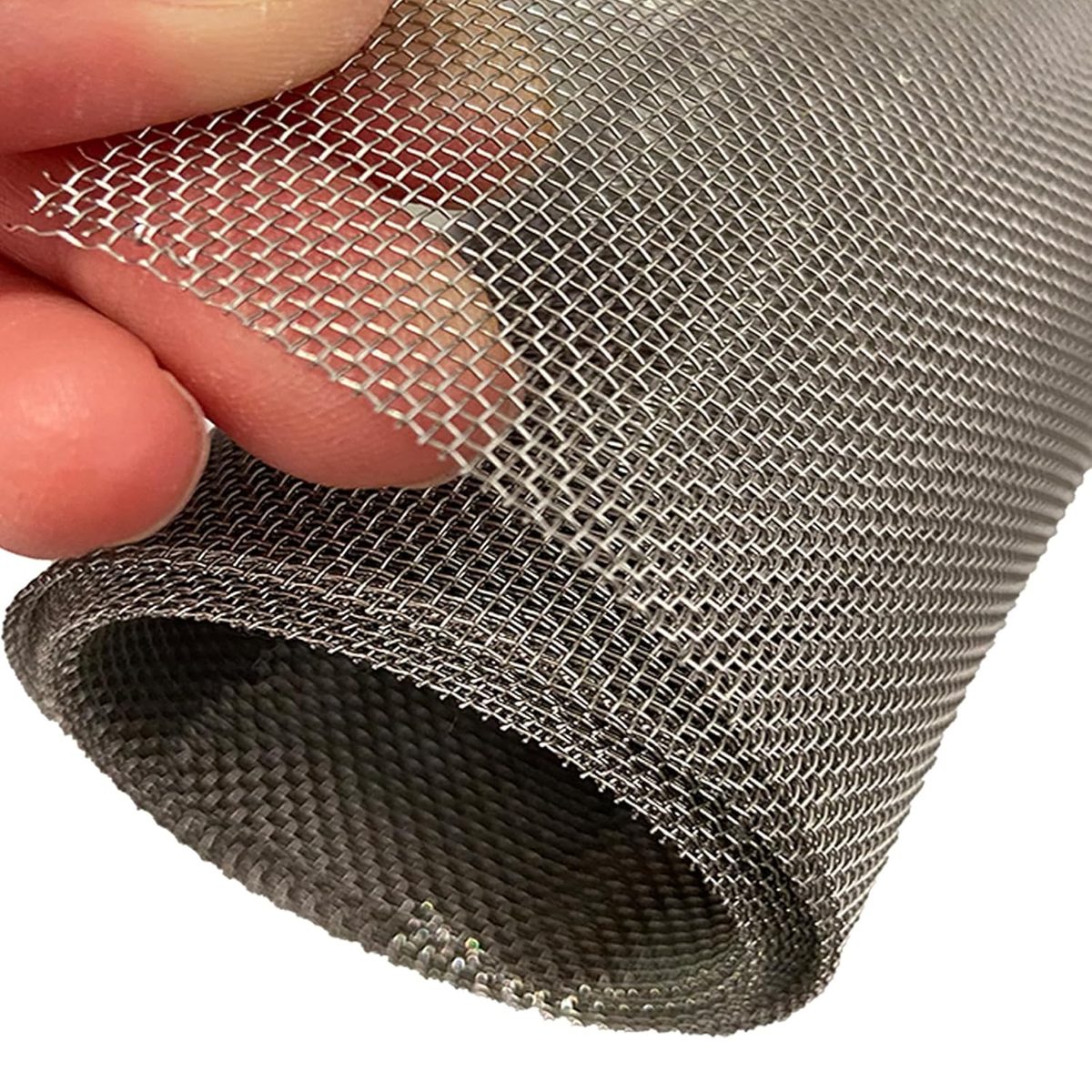
Choosing wire mesh looks simple — until you realize that one wrong parameter can mean a screen that blinds in a week, a filter that passes what it should catch, or a conveyor belt that stretches out of tolerance. This guide walks through the five decisions that matter, in the order a manufacturer actually needs them.
1. Start with the job, not the mesh
Before looking at any specification table, define what the mesh must do: separate solids from liquids, support a filter cake, protect equipment, convey product, or provide a safety barrier. The application determines which properties are critical — filtration rating, mechanical strength, corrosion resistance, or simply cost per square meter.
2. Material: match it to the environment
Stainless steel 304 suits most dry and mildly corrosive environments. Choose 316 or 316L when chlorides, acids or food-grade hygiene are involved. Galvanized steel is economical for non-corrosive screening and construction uses. Brass and copper appear in specialized filtration and decorative applications.
3. Mesh count and wire diameter define the opening
Mesh count (openings per inch) together with wire diameter determines the aperture — the actual hole size your process sees. A higher mesh count with the same wire gives finer filtration but less open area and lower flow. Always specify the required opening size in microns or millimeters rather than mesh count alone, because the same mesh count can have different apertures with different wire diameters.
4. Weave type affects strength and flow
Plain weave is the standard for most screening. Twill weave allows finer meshes with relatively heavier wire — useful when you need fine filtration plus mechanical strength. Dutch weaves (plain or twilled) are the workhorses of fine filtration, offering high strength with very fine, precisely controlled openings.
5. Dimensions, edges and finishing
Confirm width, length or cut-piece dimensions, plus edge treatment (raw cut, folded, welded or hemmed edges) and any forming — discs, cylinders, baskets or panels. These details are where most ordering mistakes happen, so put them in writing with a drawing whenever possible.
A practical checklist for your inquiry
- Application and operating environment (temperature, chemicals, food contact?)
- Required opening size or filtration rating
- Material grade
- Mesh count and wire diameter (or let us recommend)
- Dimensions, quantity and edge/finishing requirements
Send this checklist through our quote form and our engineers will confirm the specification and return a firm quotation — usually within 24 hours.