
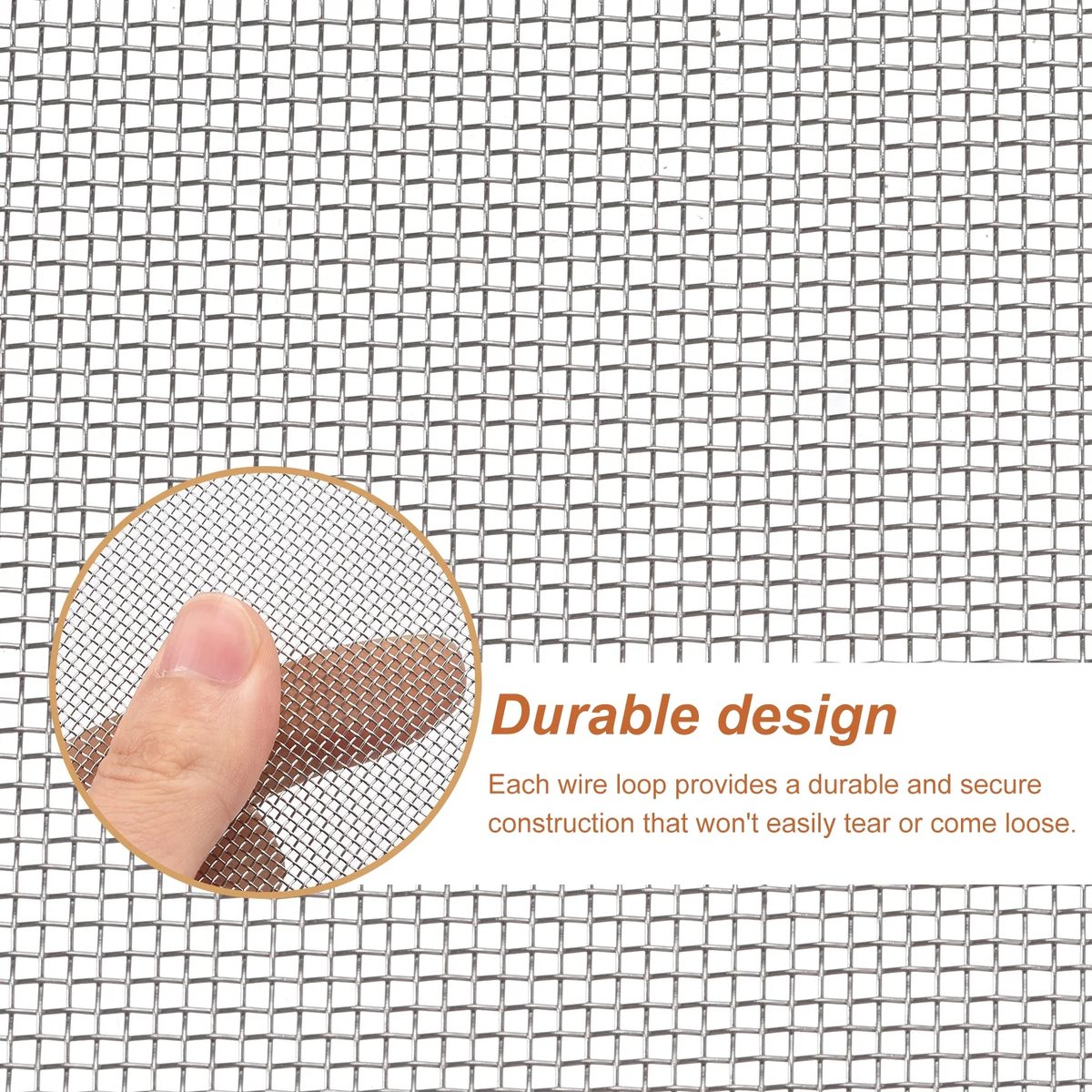
304 and 316 are the two stainless grades behind most wire mesh orders — and the most common source of expensive mistakes. They look identical, cost differently, and fail differently. Here is how to choose.
What they have in common
Both are austenitic stainless steels: non-magnetic in the annealed condition, formable, weldable, and corrosion-resistant enough for the majority of industrial environments. For dry indoor screening or general protection, either grade will outlast the equipment around it.
The real difference: molybdenum
316 contains about 2–3% molybdenum; 304 contains none. That single addition gives 316 markedly better resistance to chlorides (salt water, brine, many cleaning chemicals) and to pitting and crevice corrosion. 316L is the low-carbon version, preferred where welding is involved and sensitization must be avoided.
When 304 is enough
- Dry screening, sieving and conveying
- Architectural and decorative mesh
- General industrial filtration of non-corrosive media
- Anywhere cost matters and chlorides are absent
When to step up to 316 / 316L
- Marine, coastal or salt-spray environments
- Food, beverage and pharmaceutical processing (easier passivation, hygienic service)
- Chemical processing with chlorides, acids or solvents
- Outdoor installations in polluted or coastal atmospheres
Cost vs risk
316 typically costs noticeably more than 304. The wrong economy is specifying 304 where chlorides are present: pitting failure means replacing the mesh and dealing with contamination or downtime. When in doubt, tell us the medium, temperature and cleaning regime — we will advise honestly, even if the answer is the cheaper grade. Start the conversation through our quote form.